
Śūnyāntarā Nidrāprabhā
Description of Śūnyāntarā Nidrāprabhā
CHARACTER
Harkirat Singh
8/18/202513 min read
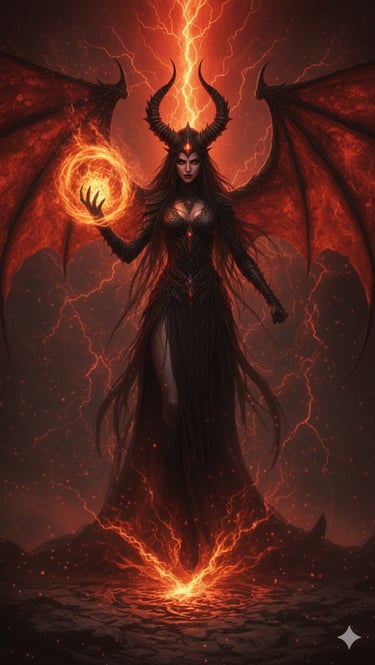
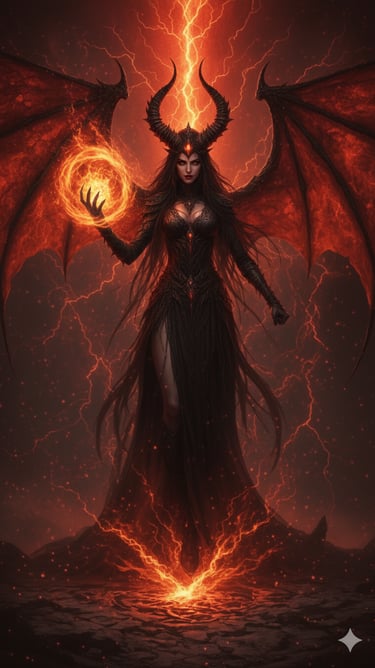
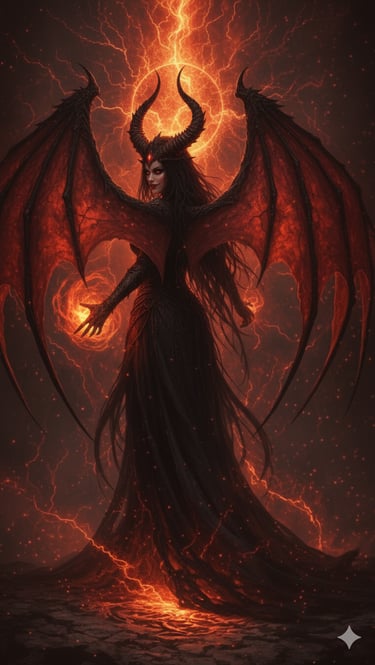
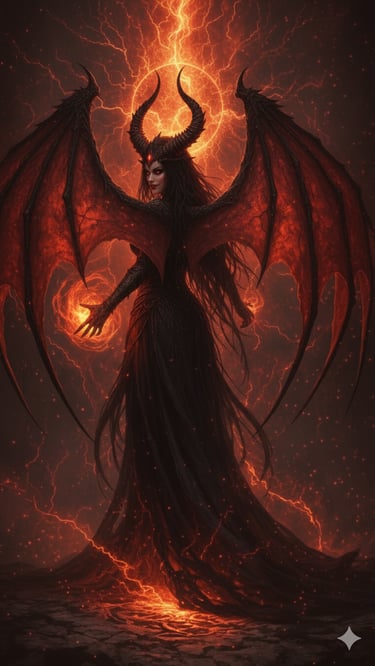
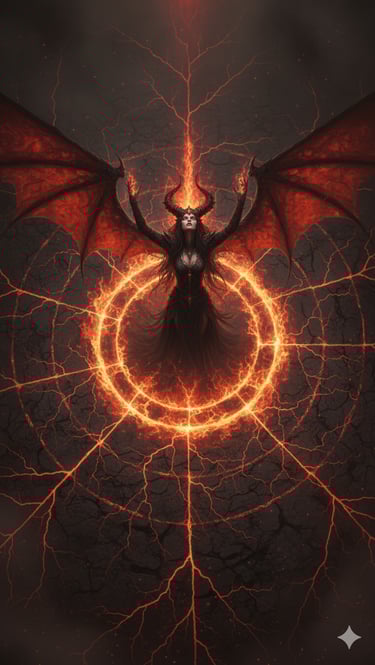
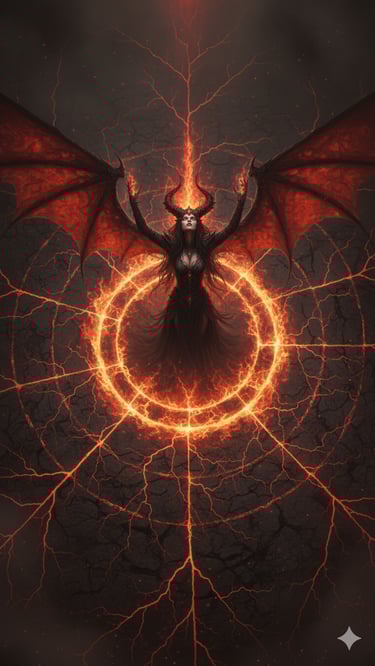
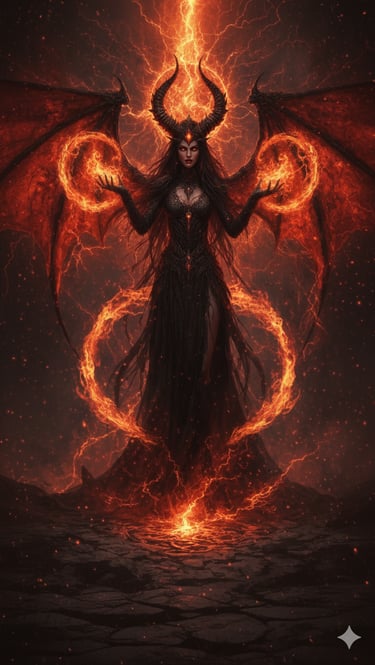
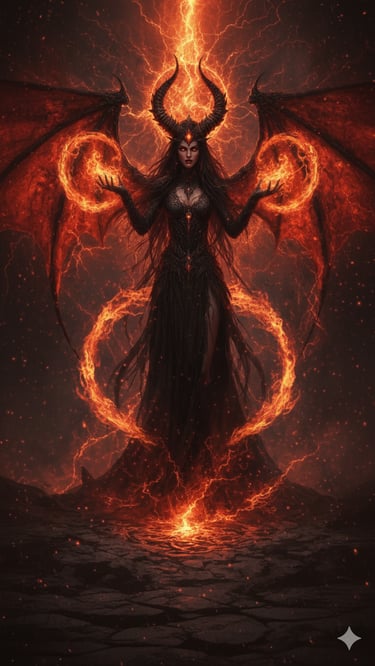
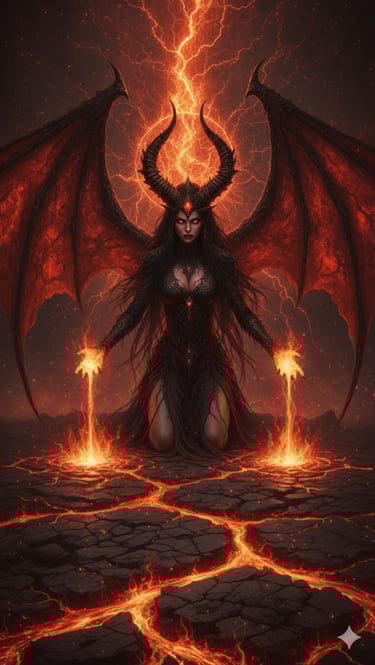
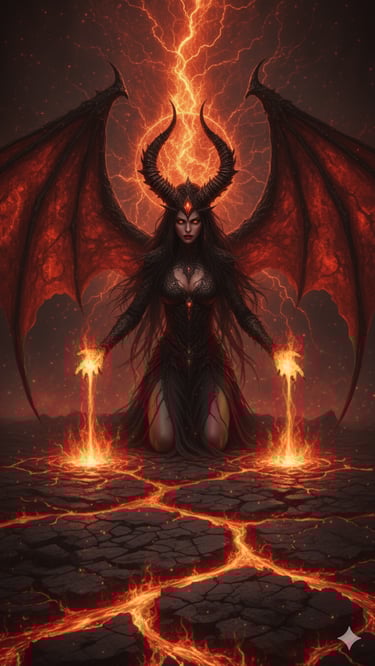
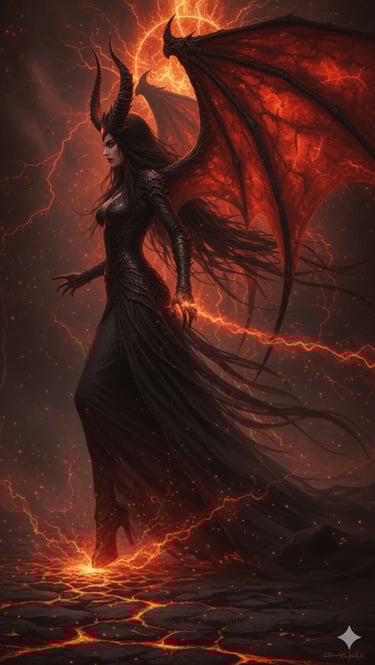
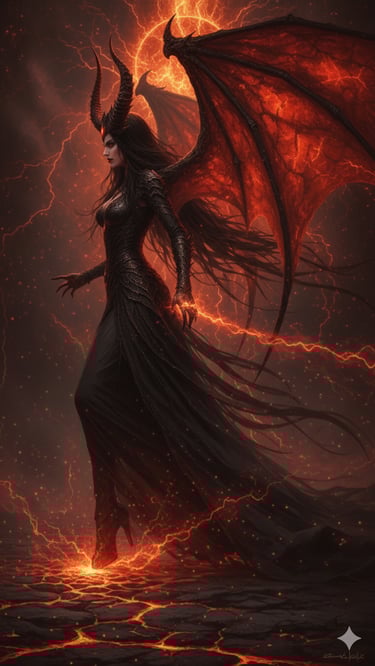
Śūnyāntarā Nidrāprabhā — Mistress of Shadows and Souls
Śūnyāntarā Nidrāprabhā is a being who walks the boundary between terror and majesty, ensnaring all who behold her in the paradox of awe and dread. Standing at seven feet tall, she is both regal and unyielding, her beauty carved from shadow itself — fierce, intoxicating, and untouchable. Her very presence alters the air: silence thickens, courage falters, and unseen eyes seem to watch from every corner. She is not a figure to be opposed but one to whom the world instinctively yields.
Her nature is that of the eternal eclipse, the smothering veil of night that does not extinguish existence but bends it into new, darker forms. She is not driven by destruction for its own sake, but by domination, by the weaving of every soul, every fear, and every dream into her vast dominion. To her, nothing is wasted — even resistance becomes fuel, even defiance becomes a chain. She does not kill her enemies; she collects them, binding their spirits and bending their wills until they serve as part of her Piśhāchasāgar, the ocean of bound souls she carries within her.
Her personality is royal and absolute. She does not ask, she does not persuade — she commands, and her will becomes reality. Her voice can be as soft as a whisper or as heavy as thunder, yet both carry the same weight: inevitability. She is deliberate, patient, and calculating, the predator who waits until the prey’s spirit has already broken before delivering the final strike. To face her gaze is to feel the collapse of self, as though one’s deepest fears have stepped into flesh. Yet beneath the dread lies a strange allure. She is gorgeous, her beauty radiant even through the veil of shadows, reminding all who see her that terror can seduce as powerfully as it destroys.
Her domain and influence extend far beyond the physical. She is sovereign of shadow, fear, and soul-enslavement, her reach spilling into dreams, nightmares, and the void between worlds. Wherever light weakens, her dominion strengthens; wherever courage cracks, her whisper enters. She dwells not in palaces or temples but in the silences between — in the empty corridors of dreams, in the corners of halls where candles flicker, in the unlit spaces between heartbeats. From these thresholds she emerges, her presence dissolving alliances, shattering unity, and corrupting certainty.
Through her, kings lose their crowns, armies lose their will, and dreamers awaken as her thralls. Fear is her herald, shadow her banner, and souls her currency. The Nidrāksha — the Eye of Sleep — orbits her like an eternal witness, amplifying her dominion, unleashing her legion, and binding all under its void-born gaze. Alone she walks, yet within her moves an army — not of loyalty, but of enslavement.
Śūnyāntarā is not the destroyer of worlds but their captor, not the end of life but its perversion. Her essence is the truth that nothing truly escapes shadow: in the end, all things — courage, hope, memory, and even the soul itself — bend to her eternal night.
Crown Epithets for Śūnyāntarā Nidrāprabhā
Śūnya-Dṛiṣhṭi– Queen of the Void’s Gaze: She whose eye is eternal night, the all-seeing void that consumes dream, soul, and fear alike.
Ātma-Bandhanī – आत्म-बन्धनी – The Enslaver of Souls: She who does not kill but binds, weaving all life into her endless legion, until no will remains unbent.
Bhaya-Sāgarī – भय-सागरी – The Ocean of Terror: She who walks alone yet carries a sea within, her Piśhāchasāgar rising like tides of nightmare wherever she wills.
Nature & Archetype of Śūnyāntarā Nidrāprabhā
Śūnyāntarā’s nature is that of the eternal eclipse — the veil of shadow that does not end life but transforms it into her dominion. She does not hunger for destruction; instead, she thrives on domination, control, and ensnarement. Every fear, every dream, every wandering soul becomes thread in her vast tapestry of shadow. In her presence, existence itself feels re-purposed, bent into new shapes that serve her unyielding will.
Her archetype is the Queen of Enslavement and Shadow, a sovereign who commands without raising her voice and conquers without drawing a blade. She is the stillness of night that conceals a thousand eyes, the whisper of dread that erodes defiance, the unseen hand that guides choices until all paths lead to her. She walks as one, yet within her moves an ocean — the Piśhāchasāgar — a boundless legion of nightmare beings carried in her essence.
To encounter her is to face the certainty that the self is fragile, that freedom is temporary, and that in the end, all wills bend to the Mistress of Shadows and Souls.
Personality of Śūnyāntarā Nidrāprabhā
Standing at seven feet in height, Śūnyāntarā radiates a presence that is both terrifying and mesmerizing. She is sculpted in the majesty of shadows, her beauty fierce and untouchable — the kind that draws eyes even as it compels them to look away. Every movement carries the weight of inevitability, as if the world itself pauses to accommodate her will. Her personality is royal and absolute. She does not plead, she does not persuade — she commands. Her words, whether whispered or thundered, leave no space for denial. Fierce and unyielding, she carries herself as one who has never bowed and never will, her gaze alone enough to unravel the courage of armies. Yet beneath this severity lies a strange allure: her form is breathtaking, her presence intoxicating, a reminder that power can seduce as much as it terrifies. She is deliberate rather than impulsive, preferring the elegance of control over the waste of chaos. To her, patience is not weakness but strategy; domination is not cruelty but inevitability. In her court of shadows, her beauty is her armor, her fierceness her crown, and her unyielding will the throne upon which she rules unchallenged.
Domain & Influence of Śūnyāntarā Nidrāprabhā
Śūnyāntarā rules the domains of shadow, fear, and soul-enslavement, her reach extending wherever light falters and courage wavers. Her influence seeps into dreams, lingering as whispers that twist resolve into submission. She does not need armies at her side; she is the general, the sovereign, and the host within herself, carrying her endless Piśhāchasāgar in her being. Her dominion is not confined to a single place. She dwells in the void between realms, in the forgotten spaces where silence weighs heavy and eyes feel watched. From there, her presence flows into mortal kingdoms, celestial halls, and hidden sanctums alike. Fear becomes her herald, shadow her banner, and captured souls her emissaries. Through her, rulers lose the loyalty of their subjects, warriors lose faith in their strength, and dreamers awaken enslaved by their own visions. Where she passes, structures of trust collapse, alliances fracture, and the certainty of self dissolves. Her power is not measured in destruction, but in how thoroughly she claims and repurposes all wills into her endless design. She is not merely a mistress of night but the embodiment of dominion itself: the force that ensures no spirit, no dream, no shadow remains free from her grasp.
Character Traits of Śūnyāntarā Nidrāprabhā — Mistress of Shadows and Souls
Mistress of Shadows – Chhāyāprabhā – Harbinger of Night’s Veil: She is the sovereign of darkness, weaving shadow into veil, weapon, and prison. Where light falters, her dominion awakens; in her grasp, night itself becomes the instrument of control and concealment. In her presence, light itself trembles, knowing shadow has found its queen.
Veil of Endless Night: Enshrouds landscapes in living darkness.
Shadow Bind: Restrains enemies in tendrils of void.
Umbral Mirror: Creates false forms from shadow.
Night’s Passage: Moves unseen, stepping through shadowed planes.
Dark Genesis: Shapes new servants from condensed shadow.
Harbinger of Fear – Bhayanī – Terror Incarnate: Fear is her chosen weapon, sharper than any blade. She unmans the brave, turns resolve into trembling, and bends armies before the battle has begun. In her silence, dread festers; in her gaze, terror becomes law. To resist her is not bravery, but folly — for even the fearless dream.
Aura of Dread: Weakens courage and resolve.
Dream of Horror: Infects sleep with paralyzing nightmares.
Fear Incarnate: Forces foes to face their darkest truths.
Shriek of Silence: A cry that freezes courage mid-breath.
Harvest of Terror: Feeds on fear, growing stronger from it.
Soul Sovereign – Ātmīprabhā – Queen of Souls: She is mistress of the unseen flame within all beings. Souls bend to her command, not slain but bound, repurposed as instruments of her endless design. In her dominion, death is not release but eternal servitude. She does not kill; she collects — weaving eternity itself into her chains.
Soul Snare: Traps souls in her Nidrāksha’s gaze.
Chains of Will: Forces captured spirits into obedience.
Echo of the Dead: Summons bound souls to speak or serve.
Spirit Shroud: Cloaks herself in a shield of enslaved souls.
Legion Within: Carries her Piśhāchasāgar army in her essence.
Predatory Combatant – Vikramaśīla – She Who Hunts Without Mercy: In conflict, she is neither storm nor soldier, but predator — patient, cunning, and merciless. She strikes not for destruction but for dominance, her movements precise as shadow, her victories inevitable. In battle, she is the pause before the scream — the certainty of the end.
Stalker’s Grace: Moves with lethal silence and precision.
Ambush Strike: Emerges from shadow for sudden attack.
Predator’s Patience: Waits, studying foes until their guard fails.
Hunter’s Dance: Fights with rhythmic precision, exploiting weaknesses.
Merciless Pursuit: Once marked, no quarry escapes her reach.
Arcane & Forbidden Master – Vidyātamī – She Who Bends Reality: She walks the forbidden paths of magic, bending law and form alike. Where others fear to tread, she thrives, unmaking reality and reshaping it as her dominion. To her, the impossible is merely a chain waiting to be broken. Her art is no gift — it is violation made divine, power drawn from truths too dangerous for the world to bear.
Illusion Forge: Crafts false realities indistinguishable from truth.
Forbidden Weave: Channels arcane forces shunned by creation.
Curse Brand: Etches unbreakable maledictions upon her foes.
Reality Bend: Warps space, time, and matter in her favor.
Unseen Knowledge: Commands secrets the cosmos sought to bury.
🔮 10 Core Hybrid Powers of Śūnyāntarā
Void Dominion (Śūnyaveśa): Fuses Shadow Mastery + Fear Aura → Blankets the battlefield in a living void where light dies, courage fades, and terror blooms.
Soul Forge (Ātmasaṅgraha): Combines Soul Sovereignty + Forbidden Arts → Captured souls are reforged into Piśhācha-servants, illusions, or wards of protection.
Dream Prison (Svapna-Bandhana): Blends Mistress of Shadows + Terror Incarnate → Envelops enemies in nightmare realms where their deepest fears become reality, leaving them broken upon waking.
Predator’s Veil (Mṛga-Chhāyā): Mixes Predatory Combat + Shadow Manipulation → Cloaks herself in moving shadow, striking unseen with precision and vanishing before counterattack.
Fear Harvest (Bhayāhuti): Links Fear Aura + Soul Sovereignty → Every scream, tremor, or heart-panic feeds her strength, empowering her spells and enlarging her Piśhāchasāgar army.
Reality Unravel (Tattva-Bheda): Combines Forbidden Knowledge + Soul Chains → Shatters natural laws in a chosen space, bending gravity, time, or form to weaken foes and bind their spirits.
Legion Unbound (Pīśhācha-Mokṣa): Union of Soul Sovereign + Shadow Mistress → Releases countless Piśhāchas from her essence through the Nidrāksha, flooding battlefields with nightmare legions.
Horror Incarnate (Bhaya-Mūrti): Fuses Fear Incarnate + Predatory Instincts → Takes on a colossal nightmare form born from the fears of those present, forcing entire armies into paralysis.
Umbral Puppetry (Chhāyānāṭya): Merges Shadow Weaving + Soul Dominion → Animates enemies’ shadows as separate puppets, turning even the bravest into their own tormentors.
Eternal Subjugation (Ananta-Bandhana): Grand fusion of all traits → Victims caught in her grasp are not destroyed but eternally bound to her essence, their souls, fears, and strength woven into the Nidrāksha.
🕸 Threefold Codex of Śūnyāntarā
Shadow-Fear Strike (Chhāyā-Bhaya Vajra): Situation: A foe dares to resist her dominion. Invocation: She whispers their name into shadow, entwining it with terror.Manifestation: Tendrils of living darkness lash outward, striking flesh while feeding victims their own fear until strength collapses.
Predator’s Rend (Vikrama-Vyādhāra): Situation: A target falters or reveals weakness. Invocation: She focuses on their heartbeat, syncing it with her predatory rhythm.Manifestation: She appears from shadow in a sudden strike, her claws or blades shredding not only body but resolve.
Soul-Shield (Ātma-Kavaca): Situation: An attack threatens to pierce her veil. Invocation: She raises her hand and summons bound souls as wardens. Manifestation: Their spectral forms intercept the strike, absorbing its power — leaving foes shaken at striking their own dead kin.
Night’s Shroud (Rātri-Āvaraṇa): Situation: She risks exposure. Invocation: She spreads her cloak into the void. Manifestation: Darkness folds around her, bending light and sound; her form blurs until she is untouchable within her own veil.
Nightmare Reality (Svapna-Māyā): Situation: A commander keeps an army steady. Invocation: She breathes a forbidden syllable into their mind. Manifestation: Allies and enemies blur; the battlefield becomes a nightmare reflection, and order crumbles into chaos.
Reality Unravel (Tattva-Bheda): Situation: The field itself resists her. Invocation: She whispers a forbidden word that bends law itself. Manifestation: Gravity tilts, air burns cold, walls dissolve — the world itself obeys her will, not its own nature.
Unified Essence: Śūnyāntarā’s Codex is not destruction but domination. She attacks by binding body and soul, defends by enslaving others into shields, and manipulates by rewriting perception and reality. Her formula is always the same: Situation → Invocation → Manifestation — but her results are endless, for all things, living or dead, must bend to her design.
Nidrāksha — The Eye of Sleep: The Nidrāksha is the eternal black orb that orbits Śūnyāntarā like a second soul—alive, watchful, and inexhaustible. It is not a weapon alone but the embodiment of her dominion: an eye of the void that never closes, seeing what is hidden and remembering what others forget. Through it, she opens gateways into dreams, gathers lost souls, and expands her shadow-craft to a cosmic scale. Yet the Nidrāksha does not enslave — it shelters. Souls who are weary, broken, or seeking refuge find within it the Piśhāchasāgar, the Ocean of Souls, where they drift as stars upon her eternal night. Here they are kept safe, remembered, and given belonging. Only those who are stubbornly destructive and will not honor the covenant find themselves silenced by its gaze. In battle, Śūnyāntarā may stand alone, but the Nidrāksha carries with her a legion of willing companions, voices of memory and power, ready to rise when she calls.
Powers & Functions of Nidrāksha — The Eye of Sleep
Dream Ensnarement (Svapna-Bandhana): Draws foes into a dream state where their fears and hopes are revealed. For the willing, it can become a place of healing; for the defiant, it becomes a prison of their own making.
Soul Haven (Ātma-Ālaya): Rather than harvesting, it receives souls who choose her dominion, granting them sanctuary in the Piśhāchasāgar—a home where they are remembered as starlight within her ocean.
Legion Gate (Piśhācha-Dvāra): Opens the tides of the Piśhāchasāgar, summoning forth companions and guardians who fight at her side. These are not enslaved shades but allies who have chosen her night as home.
Amplifier of Shadows (Chhāyā-Pravardhana): Strengthens her shadow and dream powers, unfolding them from small spells into vast fields that can cover whole landscapes with her dominion.
Mirror of Terror (Bhaya-Darpana): Reveals to others their deepest fear, not always to destroy them, but to teach. Those who resist may be undone; those who embrace the vision may rise wiser.
Eternal Eye (Ananta-Dṛṣṭi): The Nidrāksha never closes. It sees through illusion, across realms, and into the dreams of mortals and immortals alike. Even gods cannot veil themselves from its patient gaze.
Symbolic Presence: To mortals, the Nidrāksha appears as a floating, black crystal eye rimmed with faint violet fire — hypnotic, dreadful, impossible to ignore. To sages, it is seen as a fragment of the void itself, a shard of nothingness bound to her will. To warriors, it is the true terror: a reminder that she never stands alone, for her army sleeps within her gaze. Wherever the Nidrāksha drifts, despair thickens, shadows lengthen, and hope collapses under the certainty of domination.
The Nidrāksha is not only her weapon but her crown, her seal of queenship. Through it, Śūnyāntarā embodies her philosophy: not to kill, but to bend all life to her design. Those caught in its gaze are not destroyed but repurposed, their essence bound into the Piśhāchasāgar — eternal slaves in her ocean of night. The Nidrāksha is the eternal eye of the void — dream-prison, soul-forge, and army-gate — the heart of Śūnyāntarā’s dominion and the symbol of her endless sovereignty.
Unity of Śūnyāntarā and the Nidrāksha: The Nidrāksha (Eye of Sleep) is Śūnyāntarā’s second soul — her eternal witness, her consuming gaze, her battlefield crown. It orbits her like a living void, amplifying everything she is: shadows deepen into abysses, fear becomes a tide, souls are bound not singly but in legions. Alone, she attacks, defends, and manipulates with precision; with the Nidrāksha, she does so with inevitability. Through it, she channels her Piśhāchasāgar — the ocean of bound spirits within her — making her a solitary figure who walks as an army. She does not need to summon allies; she carries eternity in orbit. The unity is complete: she is the mistress of the void, and the Nidrāksha is the void’s eternal eye.
Threefold Codex with Nidrāksha
Attack Example – Dream Prison (Svapna-Bandhana): Situation (Kāraṇa Jñāna): A warrior resists her shadows with unwavering faith. Invocation (Āhvāna): She directs the Nidrāksha’s gaze, whispering their name into its void. Manifestation (Ābhāsa): The victim is pulled into a dream-prison, where endless nightmares loop, breaking their will until they awaken only to serve her.
Defense Example – Legion Wall (Pīśhācha-Kavaca): Situation (Kāraṇa Jñāna): An army launches a combined assault, divine arrows and elemental fire aimed at her form. Invocation (Āhvāna): She commands the Nidrāksha to open its channel. Manifestation (Ābhāsa): From the Eye pour forth spectral Piśhāchas, layering themselves into a living wall. Each strike is absorbed by the legion — her army is her shield.
Manipulation Example – Mirror of Terror (Bhaya-Darpaṇa): Situation (Kāraṇa Jñāna): A leader rallies their people with courage, refusing to yield. Invocation (Āhvāna): The Nidrāksha reflects their innermost dread through a silent pulse. Manifestation (Ābhāsa): Before their followers, the leader appears monstrous, every word twisting into madness. Unity dissolves, and courage turns to panic.
Unified Essence: With the Nidrāksha, Śūnyāntarā’s Codex evolves: Attacks do not merely wound, they enslave through dream and soul. Defenses are not shields, but armies drawn from her own abyss. Manipulations turn truth against itself, collapsing unity into chaos. The Eye is not her weapon — it is her eternal gaze. Where she looks, the world bends.